
From June 2nd to 6th, 2025, we had the pleasure of attending the final meeting of the NEUROTWIN project in Barcelona. Over the course of the week, researchers from across Europe gathered to present the latest findings, share progress, and reflect on what we have achieved together over these past four years.
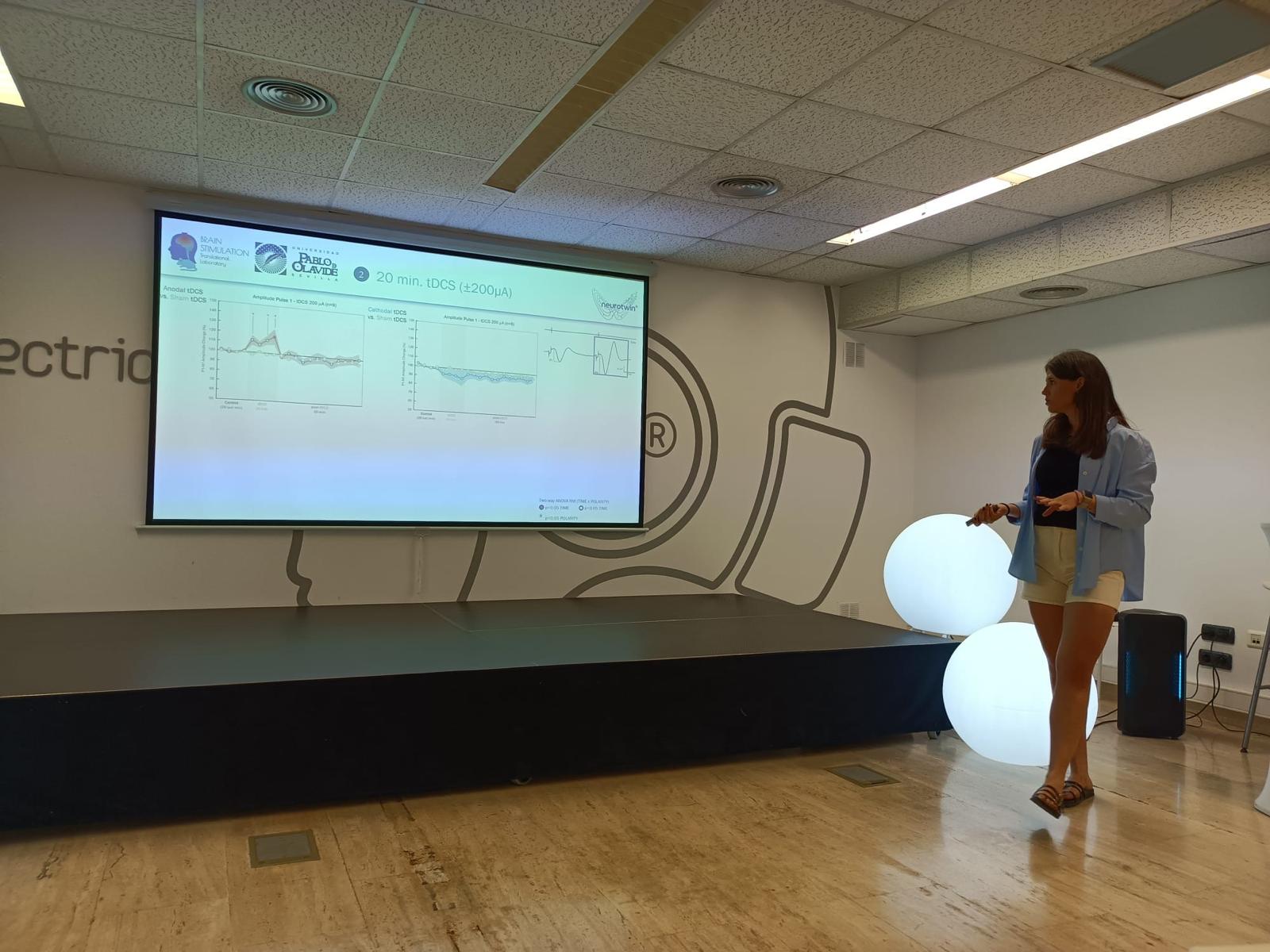
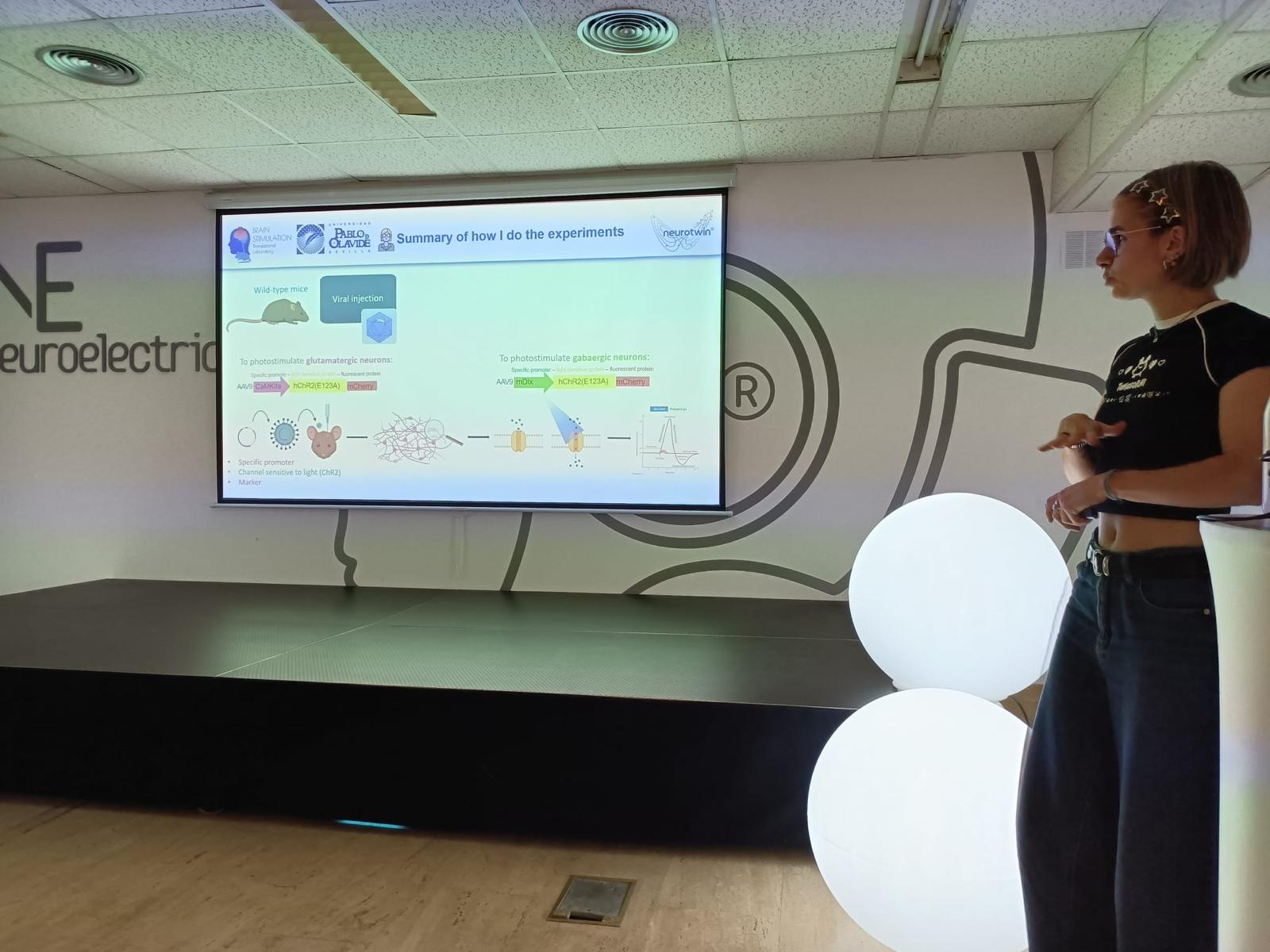
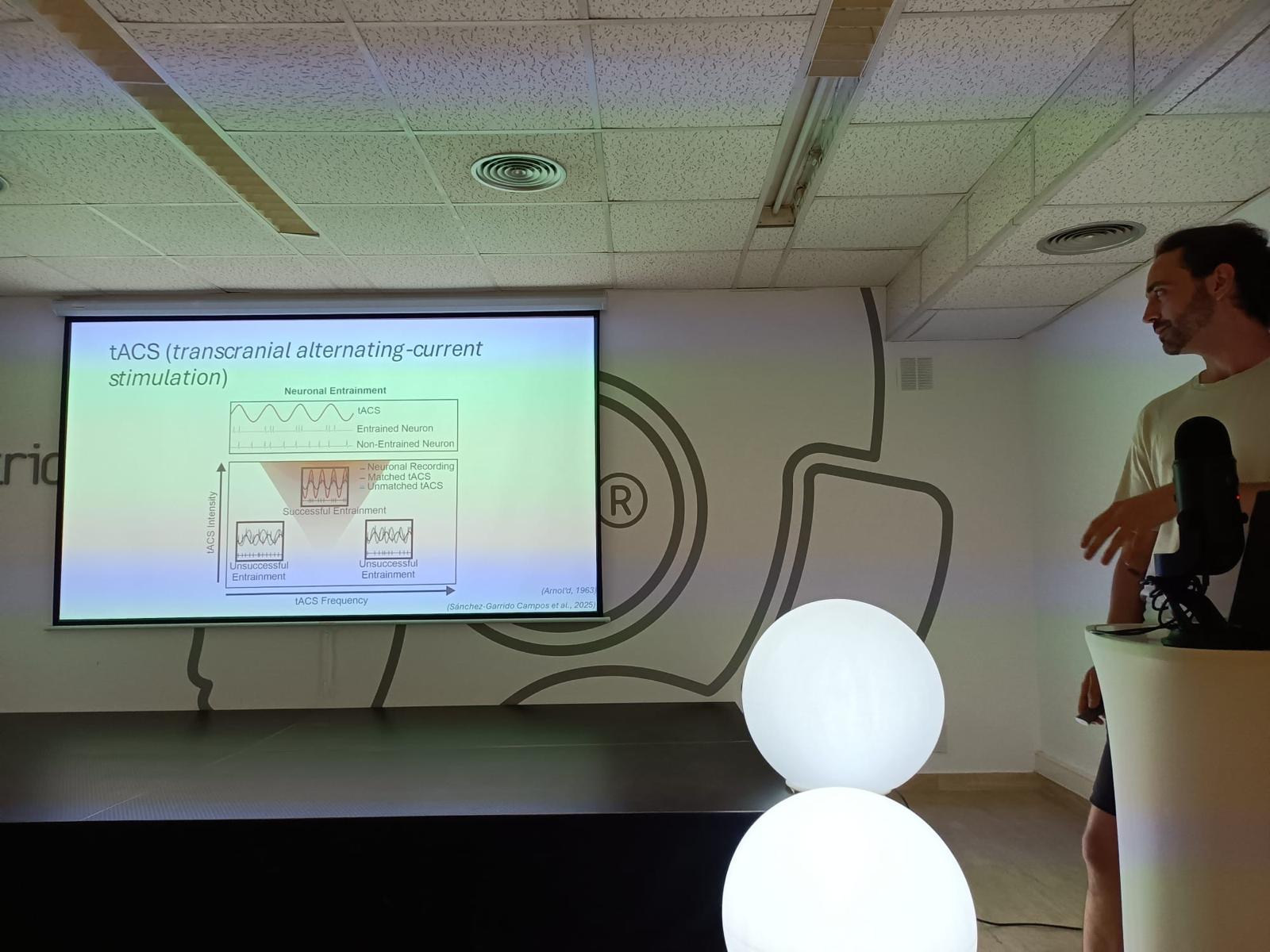
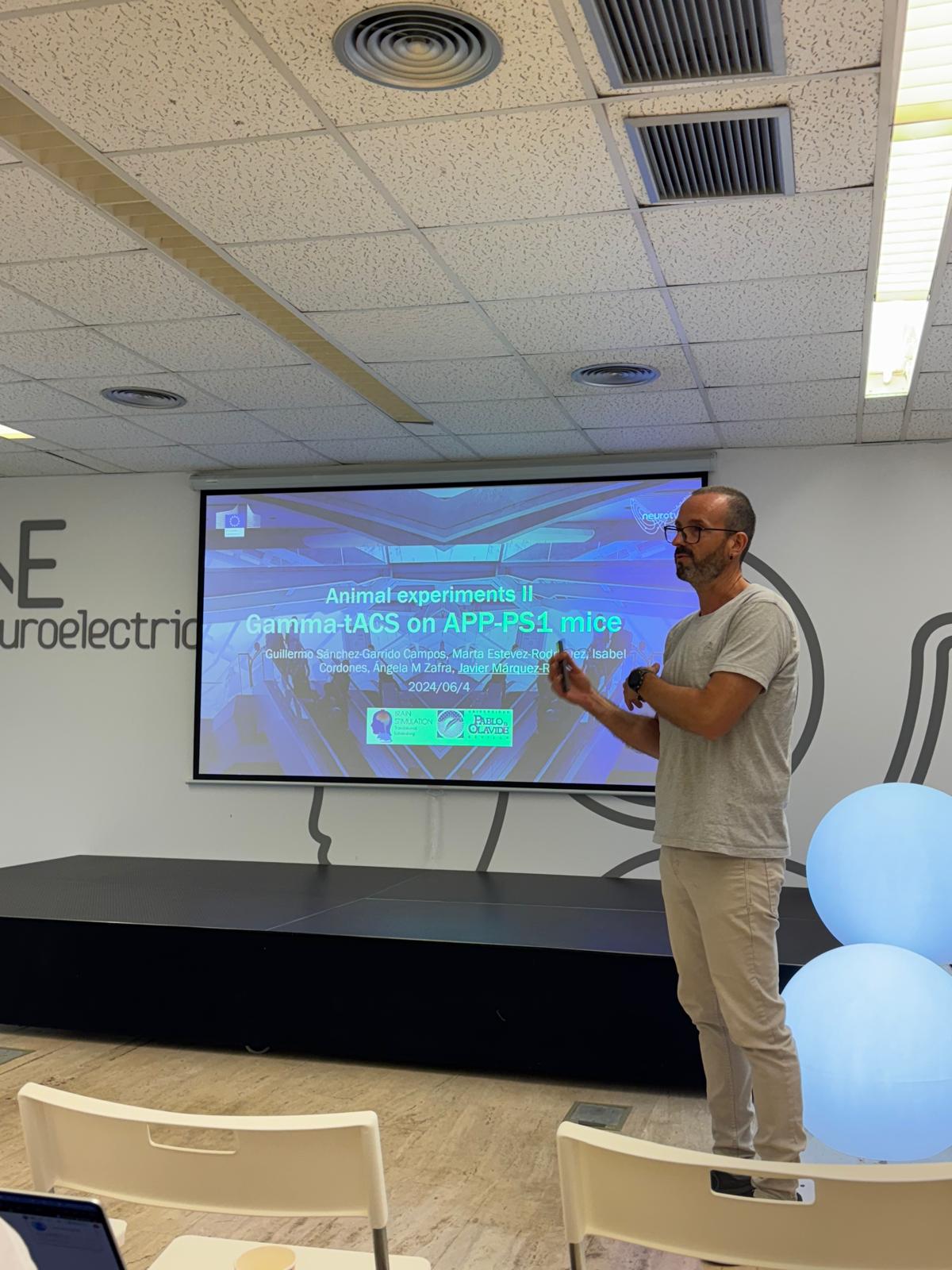
During the meeting, we had the opportunity to present our most recent experimental results and showcase the advances made by our lab within the project. It was a moment of pride to look back at everything that has been accomplished and to discuss with our collaborators the scientific journey we’ve shared.
NEUROTWIN is an Horizon 2020 funded initiative which was designed to develop personalized hybrid brain models (“digital twins”) that integrate neuroimaging, computational simulations, and non‑invasive brain stimulation to optimize therapy for neuropsychiatric conditions such as Alzheimer’s disease
We had the privilege of collaborating closely with top European institutions:
- Neuroelectrics (Barcelona), with Giulio Ruffini as the project coordinator, leading hybrid brain modeling and tES optimization.
- Universitat Pompeu Fabra (UPF) (Barcelona), with Professors Gustavo Deco and Jordi García‐Ojalvo heading computational modeling and data analysis.
- Leibniz‑Institut für Arbeitsforschung an der TU Dortmund (IfADo), with Prof. Michael Nitsche and Dr. Min‑Fang Kuo focusing on healthy participant trials.
- Uppsala University (UU), with Prof. Kathinka Evers and Dr. Manuel Guerrero handling ethics, dissemination, and public outreach.
- Massachusetts General Hospital (MGH), with Dr. Emiliano Santarnecchi involved in Alzheimer’s pilot studies.
- Fondazione Santa Lucia (FSL) in Italy, with Dr. Giacomo Koch joining Alzheimer’s clinical pilot efforts
- Universidad Pablo de Olavide (UPO) (Seville, us!), led by Dr. Javier Márquez‑Ruiz, conducting in‑vivo experiments.
Now, as the project concludes with impressive scientific achievements, we’re excited by the possibility of continuing this journey. A new proposal is already under consideration to transform NEUROTWIN’s legacy into future research efforts.
We feel deeply grateful for being “Neurotwiners“. The knowledge gained, the collaborations built, and the results obtained mark a significant step forward in the field of brain stimulation. We’re excited for what comes next.

 Brain Stim Lab